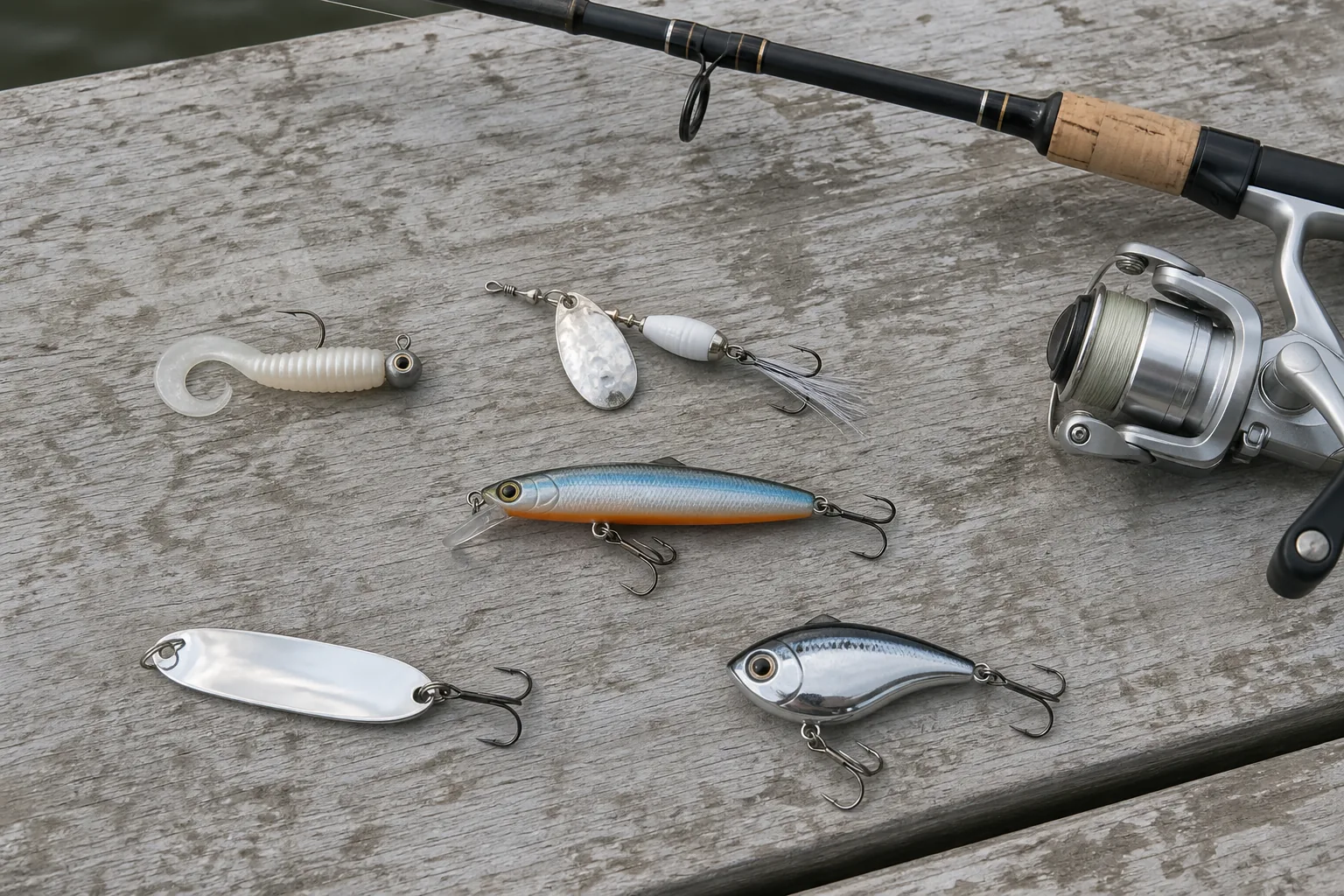
Quick lure selector
| Situation | Start with | Adjustment |
|---|---|---|
| Shallow or moderate flow | 2-inch white soft plastic | Use the lightest jighead that maintains contact |
| Fish are scattered | White or silver inline spinner | Fan-cast and vary retrieve depth |
| Deep or distant fish | Chrome spoon | Count it down before the retrieve |
| Strong current seam | White bucktail jig | Swing through the soft edge of the seam |
Crappie Magnet Shad Soft Plastic Kit
Use it for: Shallow runs, creek mouths, and fish feeding on small shad
A compact white shad profile is the closest match here to the Arkansas Game and Fish Commission run primer, which recommends a white 2-inch curly shad on a light jighead. The kit is not the exact lure named by AGFC, so treat it as a convenient category match rather than an official endorsement.
Starting retrieve: Rig the smallest white profile on a light jighead, cast slightly upstream, and keep it moving just above bottom.
Check Current Price on AmazonAffiliate link — we may earn a commission at no extra cost to you.
Worden's Rooster Tail Inline Spinner, 1/4 oz
Use it for: Roaming fish, moderate flow, or stained water
The flash and vibration make an inline spinner a practical search bait. AGFC specifically includes a small white spinner with a silver blade in its spring-run guidance, and a later fishing report names a 1/8-ounce white Rooster Tail as a white bass option.
Starting retrieve: Cast across the current and retrieve only fast enough to keep the blade turning without pulling the lure out of the strike zone.
Check Current Price on AmazonAffiliate link — we may earn a commission at no extra cost to you.
Acme Kastmaster, 1/2 oz Chrome
Use it for: Deeper pools, wind, and fish holding beyond light-jig range
A compact chrome spoon reaches water that a light jig cannot. AGFC weekly reports repeatedly include spoons among white bass options, including Kastmaster-style slab spoons for deeper fish. A half-ounce model is more lure than the shallow-run starting rig, so reserve it for depth, current, or casting distance.
Starting retrieve: Count it down, then use a lift-and-fall retrieve while keeping enough tension to feel a strike on the drop.
Check Current Price on AmazonAffiliate link — we may earn a commission at no extra cost to you.
Croft White Bucktail Jig, 1/4 oz
Use it for: Tailraces, bridge constrictions, and faster current
A white bucktail presents a small baitfish shape without a soft-plastic tail that can slide down the hook. AGFC reports include jigs and shad-imitating lures for white bass; this is our practical current-oriented pick within that broad category, not a product named by the agency.
Starting retrieve: Cast upstream of a visible current seam and let the jig swing through the slower edge instead of dragging it straight against the strongest flow.
Check Current Price on AmazonAffiliate link — we may earn a commission at no extra cost to you.
What the official guidance actually says
If you are still deciding when to go, start with our guide to Arkansas white bass run timing. It separates the calendar window from the water-temperature, rainfall, and flow signals that move fish.
The Arkansas Game and Fish Commission's spring-run primer says white bass begin concentrating near stream mouths around 50 degrees, then move upstream as water reaches the mid-50s. Its lure guidance starts small: a white 2-inch curly shad on a 1/16-ounce jighead, a white spinner with a silver blade, or a small suspending minnow plug. Weekly AGFC fishing reports broaden that list with Twister Tails, jigs, spoons, swimbaits, and other shad imitators. Those reports describe conditions at particular waters and times, so use them as pattern evidence rather than a promise.
If a light jig repeatedly sweeps over the fish, add weight. If a heavier lure drags bottom or snags every cast, go lighter. In stained water, spinner vibration and flash can help; in clear, calm water, begin with the smaller shad profile. Check current fishing regulations and any dam or access restrictions before leaving home.
Sources and research notes
- Arkansas Game and Fish Commission: White bass run spawns action across Arkansas — run timing and the agency's core lure suggestions.
- AGFC Weekly Fishing Report 291 — recent examples of Twister Tails, jigs, spoons, and shad imitators.
- AGFC Weekly Fishing Report 242 — an inline-spinner example and spoon use for fish holding deeper.
- AGFC Weekly Fishing Report 214 — chrome slab-spoon examples for deeper white bass.
Selection method: we matched available products to source-supported lure categories, then disclosed where a product is only our category-level interpretation. We did not use marketplace ratings, invented field tests, or unsupported performance claims.
Build the rest of the trip
White bass often concentrate where current funnels bait. Continue with our gear guide for fishing below dams, or compare the heavier striped bass lure options when hybrids and stripers share the same water.