Striped Bass vs. Fluke: Which One to Target, and Which One Eats Better
Unlike most fish comparisons, this one is not a mix-up at the fish counter. Striped bass and fluke are the two fish an inshore Atlantic angler actually chooses between on a given morning, and they pull in opposite directions: one is a moving-water, chase-the-bait fish you hunt in current and structure, the other is a flatfish lying on sand waiting to ambush whatever drifts past. They fight differently, they are caught with different techniques, and on the plate they are close to opposites. Here is how the two split on the water and in the pan.

The Short Answer
Fluke is the better eating fish and striped bass is the better fight, and almost everything else follows from that. Fluke — the summer flounder — is a lean, sweet, delicate flatfish you catch by drifting a jig along sand near the bottom, and it produces thin fillets good enough to serve plain or raw. Striped bass is a thick, firm, moderately fatty fish you catch by moving a bait through current and structure, and it fights harder than a flatfish ever will. They are not substitutes for one another. They are two different trips, and on the Atlantic coast a lot of anglers pick one per morning based on tide, wind, and what they feel like eating that week.
Gearing Up for the Striper Half
These three cover the striper side — something to fight the fish with, something to find them with, and something for cold water. No fluke gear here: a fluke drift is a lighter, bottom-feel setup we have published no research on, and we would rather say nothing.
Ugly Stik Bigwater Combo (Penn Pursuit IV 5000)
A striper worth the trip is a 5-to-20-pound fish that runs hard in current, which is more than a bass-weight spinning setup wants to argue with. This combo pairs a heavy-power blank with a 5000-size saltwater-rated reel, so it handles the fish and the structure without being a specialist purchase.
Affiliate link — we may earn a commission at no extra cost to you.
Storm WildEye Swim Shad (5 in / 6 in)
Stripers are eating baitfish, and a pre-rigged swim shad is the fastest way to put a bait profile in front of them without rigging anything. Cast, count down, slow-roll. It is the lure to start with when you do not yet know what depth the fish are holding.
$8-$11 (3-pack) · 4.7/5 grade Check Price on AmazonAffiliate link — we may earn a commission at no extra cost to you.
Cotton Cordell Gay Blade (1/2 oz)
Late fall through winter, when fish sit deep and stop chasing, a blade bait ripped off the bottom and fluttered back down draws reaction strikes a swimbait will not. Cheap enough to lose a few to structure without it stinging.
$5-$8 (each) · 4.3/5 grade Check Price on AmazonAffiliate link — we may earn a commission at no extra cost to you.
Full breakdowns live in Best Lures for Striped Bass Below the Dam and Best Striped Bass Tackle.
The Face-Off
You will never confuse these two in the boat. One is a round-bodied bass built to swim and chase; the other is a flat oval built to lie on the bottom with both eyes pointed at the sky.
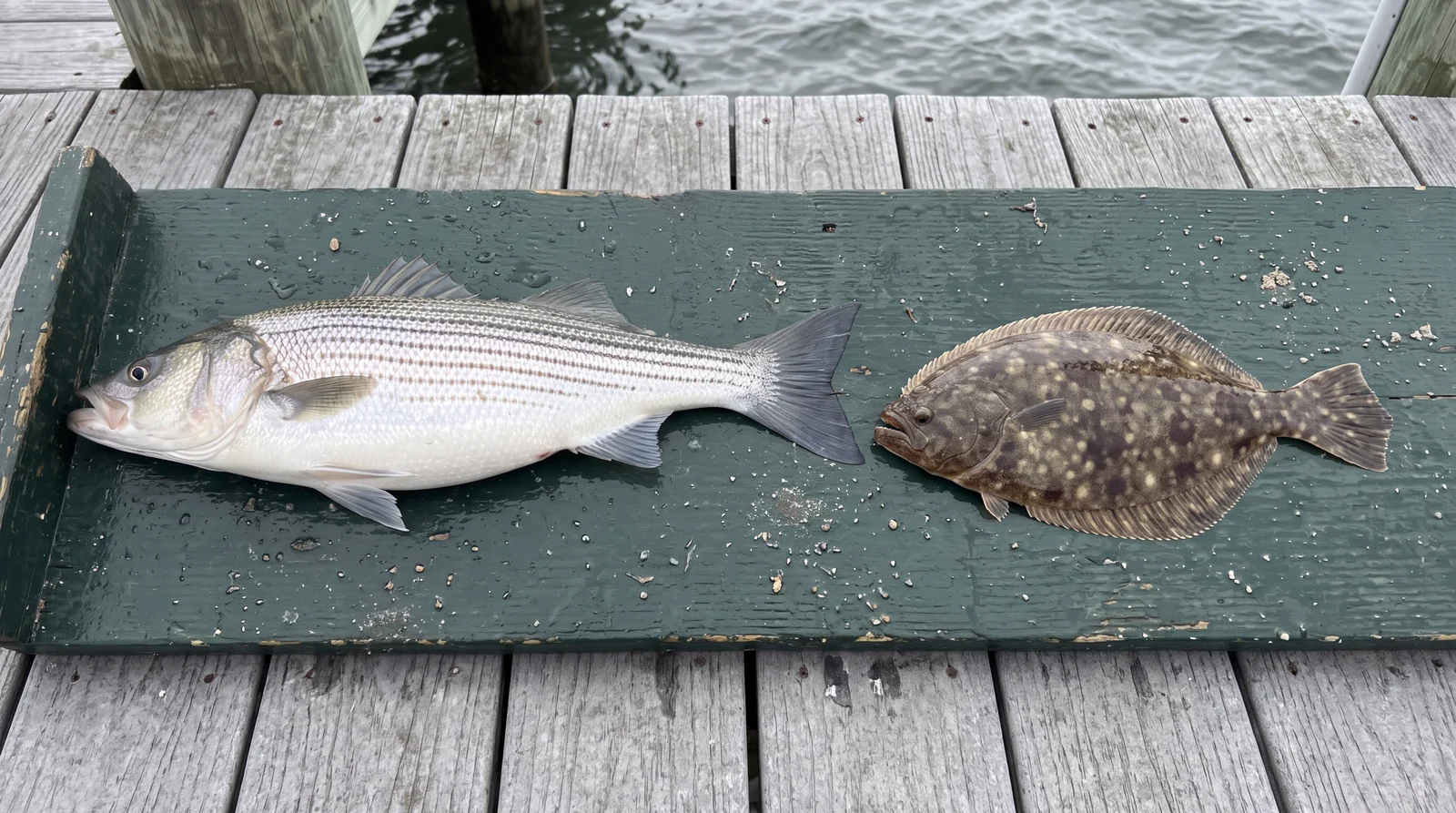
Striped Bass vs. Fluke, Side by Side
| Feature | Striped Bass | Fluke (Summer Flounder) |
|---|---|---|
| What it is | Morone saxatilis — a wild temperate bass that runs coastal rivers to spawn; also stocked inland in reservoirs | Paralichthys dentatus, the summer flounder — a left-eyed flatfish of the Atlantic coast, roughly Maine to North Carolina |
| Where it sits | Anywhere in the water column — rips, rock, bridge shadow, tailrace current, bait schools | On the bottom, usually sand or a sand-to-structure edge, buried or lying flat and facing into the drift |
| How you catch it | Casting, trolling, or live-lining moving baits and lures to fish that are hunting | Drifting bucktails, jigs, and bait strips along the bottom so they pass an ambush predator that is not chasing |
| The fight | Long, heavy runs; uses current against you. A big one is a genuine test of drag and knots | Short, stubborn, and flat — the body itself acts like a plate against the pull rather than running far |
| Flavor | Mild but distinctly sweet, with more richness than most white-fleshed fish | Clean, sweet, and delicate — widely treated as one of the better-eating inshore fish on the coast |
| Texture | Firm, meaty, moderate flake — holds together on a grill grate | Fine, tender, and thin-flaking; the fillets come off the fish thin and want gentle handling |
| Typical fillet | Thick, often portionable into steaks, off a fish that commonly runs 5-20 lb | Four thin fillets per fish rather than two, because the flatfish body is filleted top and bottom on each side |
| Federal mercury tier | "Good Choices" on the joint FDA/EPA advice chart — about one serving a week | Flounder sits in the "Best Choices" column — two to three servings a week |
Hunter vs. Ambusher: Why the Techniques Do Not Overlap
A striped bass is looking for its next meal. It moves with tide and current, pushes bait against structure, and will travel to intercept something that looks alive. That is why striper fishing is mostly about reading water — a rip line, a bridge shadow, a boulder field, the seam below moving water — and then putting a swimming profile through it at the right depth. You cover ground until you find fish that are feeding.
A fluke is waiting for its next meal. It settles onto sand, often at the edge where clean bottom meets a lump, a channel, or a patch of structure, and faces into the current so food comes to it. Chasing is not the plan. That is why the standard approach is a drift: let the boat or the tide carry you across the bottom while a bucktail or jig ticks along at the fish's eye level. You are not searching for feeding fish so much as passing a bait in front of a lot of stationary ones.
That single difference explains the gear split. Striper tackle is built around drag and backbone, because the fish runs and the structure is unforgiving. Fluke tackle is built around sensitivity and bottom contact, because the whole game is knowing exactly where the bottom is and noticing when the weight of it changes. A rod that is right for one is noticeably wrong for the other.
On the Plate
Fluke is the more refined fish. The flesh is very white, very lean, and mildly sweet, with a fine flake and none of the oiliness that makes some fish read as fishy. It is good enough raw that it is a standard sushi and crudo fish, and the classic hot preparations are the gentle ones — a light dredge and a quick pan-fry, a bake under a sauce, a simple broil. The limitation is structural: a fluke fillet is thin, so it is finished in a couple of minutes and it will break apart if you handle it like a steak.
Striped bass is the more forgiving fish. It has a clean, slightly sweet flavor of its own and enough fat to stay moist under real heat, which is why a striper fillet with nothing but salt, oil, and fire is a finished dish. It grills, it blackens, it roasts whole, and it holds its shape in a chowder instead of dissolving into it. If you are cooking for a crowd over unpredictable heat, striper is the safer fish to put in front of them.
One practical note on yield: a flatfish is filleted differently. A fluke gives you four thin fillets — top and bottom on each side of the backbone — rather than the two thick slabs you get off a striper. A big fluke and a modest striper can put similar weight in the cooler and still cook nothing alike.
How Much of Each You Should Eat
The joint FDA and EPA advice-about-eating-fish chart puts flounder in its "Best Choices" tier — low enough in mercury for two to three servings a week — and striped bass one tier down in "Good Choices," about one serving a week. That gap is consistent with what the two fish are: fluke is generally taken at a smaller size, while striped bass is a longer-lived predator that accumulates more.
Those federal tiers are a starting point, not the last word. Many states publish their own advisories for locally caught fish that are stricter, sometimes specific to a single river or bay and tied to fish length. If the fish came off your own line rather than a counter, your state agency's advisory for that water is the number that matters.
Related Comparisons
- Striped Bass vs. Sea Bass — the name collision that actually happens at the fish counter.
- Striped Bass vs. Tilapia — wild fish you catch against the cheapest fillet in the case.
- Best Striped Bass Tackle — rod, reel, line, and terminal tackle for striper water.
- Best Lures for Striped Bass Below the Dam — lure picks matched to tailrace current.
Some links on this site are affiliate links — see our affiliate disclosure.
How We Research
This comparison was built from species and fisheries-management profiles for both fish, the joint FDA/EPA advice-about-eating-fish guidance, and culinary reference material on how each is filleted and cooked — not from one trip or one meal. Size, season, and bag limits for both species are revised regularly and vary by state, so none are quoted here; treat your state agency's current regulations as the authority. Gear grades reuse the same research behind our striper lure and tackle guides, and no fluke-specific gear is recommended because we have not published research on it. Read our full methodology.
Frequently Asked Questions
Which tastes better, striped bass or fluke?
For most people, fluke — but they are being judged on different things. Fluke is delicate, clean, and sweet, with a fine flake and almost no oiliness, which is why it turns up on restaurant menus and gets eaten raw as sushi-grade hirame. Striped bass is firmer, meatier, and richer, closer to a fish steak than a fillet. If you want the more refined plate, fluke wins. If you want something that stands up to a grill, a blackening pan, or a chowder pot without falling apart, striper does.
Is fluke the same thing as flounder?
Fluke is one specific flounder, not a synonym for the whole group. Fluke is the summer flounder, Paralichthys dentatus, and it is left-eyed — lay it belly-down with the eyes up and the head points to your left. Winter flounder is a different species, right-eyed, smaller, and with a much smaller mouth. Menus and fish counters often just say "flounder" for either, so if the distinction matters to you, ask which one it is.
Do you fish for fluke and striped bass the same way?
No, and this is the practical reason anglers pick one per trip. Striped bass are hunting: you are covering water, reading current, and moving a bait past a fish that is willing to chase. Fluke are ambushing: they lie flat on sand or along a sand-to-structure edge and take what drifts by, so the classic approach is a controlled drift with a bucktail or jig ticking bottom. Gear follows technique — striper work is a heavier rod and stronger drag, fluke drifting is lighter and much more about feeling the bottom.
Which one is easier for a beginner?
Fluke, in most places where both are available. A drift over sand with a jig near the bottom is a forgiving pattern that does not require reading current seams or timing a tide window the way striper fishing does, and fluke are more numerous than keeper-size stripers in a lot of inshore water. The catch is the bite: fluke often just get heavy rather than hitting hard, so the learning curve is in noticing the strike, not in finding the fish.
What are the size and bag limits for each?
Both are actively managed and the numbers change, so any figure printed here would be wrong within a season. Summer flounder limits are set state by state each year under the interstate management process, and they differ noticeably between neighboring states. Striped bass along the Atlantic coast is managed with a slot limit — a fish has to fall inside a length window to be kept — and that window has been revised more than once in recent years. Check your state agency's current regulations for the water you are fishing before the trip, not after.
Can I substitute fluke for striped bass in a recipe?
Going one direction, yes. Striped bass can stand in almost anywhere fluke is called for, because a thicker firmer fillet survives anything a thin one does. Going the other way is where dinner goes wrong: a fluke fillet is thin enough to overcook in a minute or two and delicate enough to break through a grill grate, so it wants a pan, a light bread or batter, or a quick bake — not the direct heat and long cook a striper fillet handles.