Field Guide
How to Rig Dip Bait for Catfish
For true dip bait, slide an egg sinker onto the main line, tie on a snap swivel, and clip on a pre-rigged ribbed dip worm or tube. The holder carries the soft bait. Fiber and punch baits are different formats and may call for a bare hook instead.
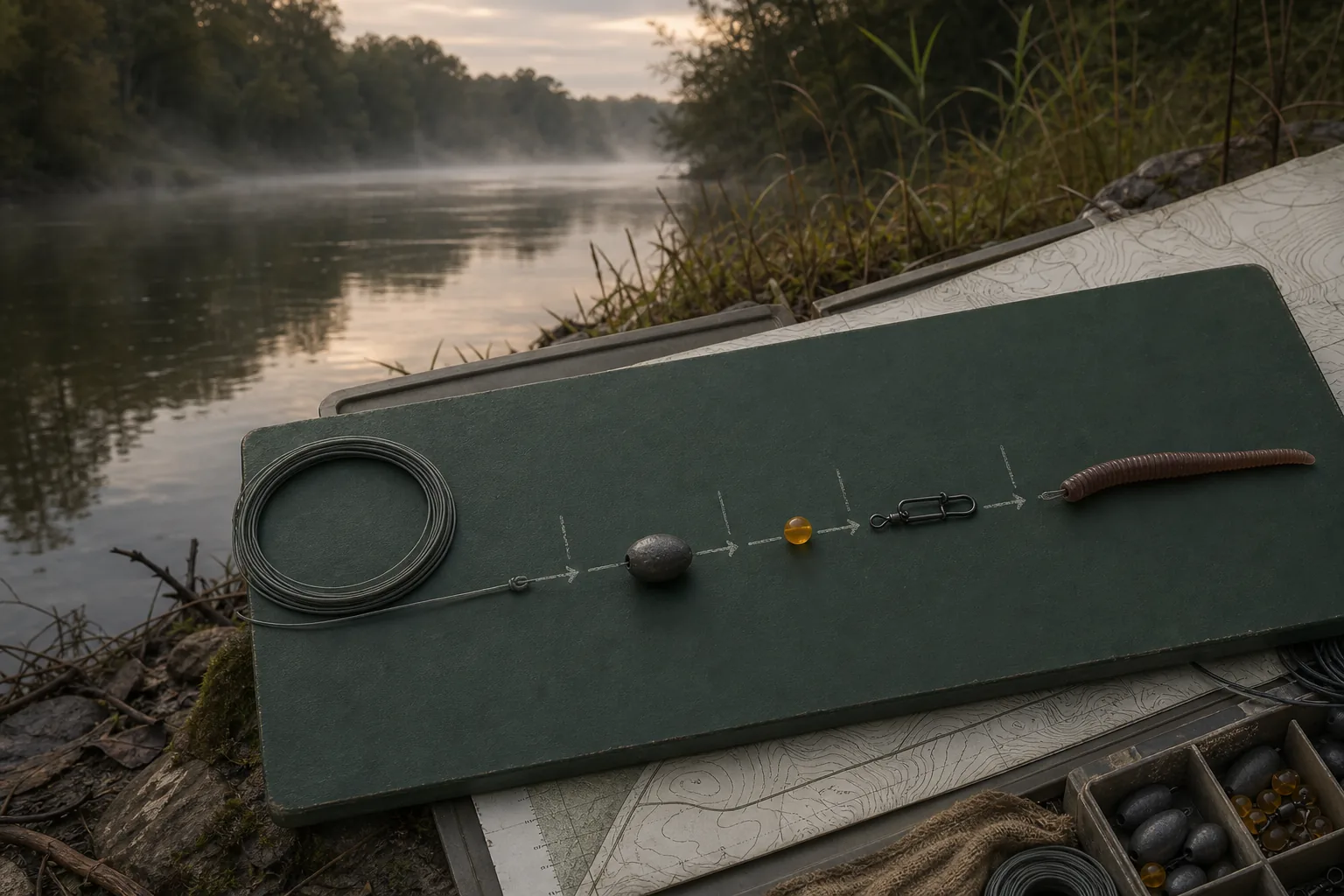
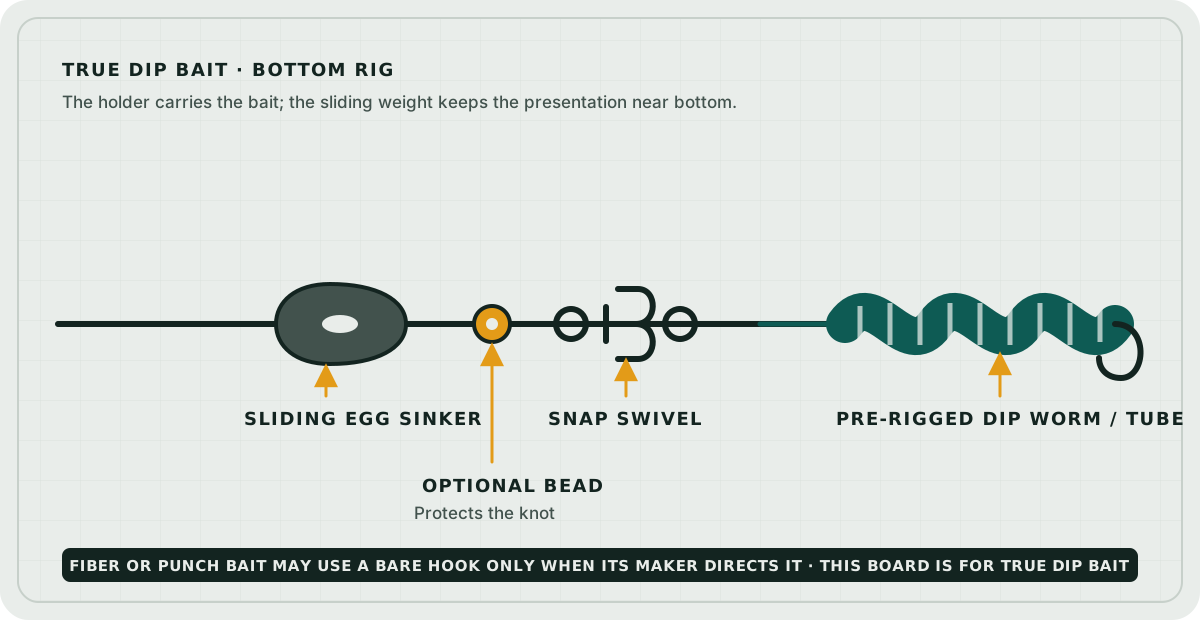
True dip-bait bottom rig. The bead is optional; the pre-rigged holder clips to the snap swivel.
Setup checked against Ready2Fish dip-bait rig instructions.
- Pass the main line through a sliding egg sinker. Use only enough weight to keep the bait where you put it.
- Add an optional bead if you want a buffer between the moving sinker and the knot.
- Tie a snap swivel to the main line, then check that the snap closes completely.
- Clip on a pre-rigged ribbed dip worm or tube and work true dip bait into the holder before casting.
Rig build
Tie the rig in four moves
1. Slide on the weight
Pass the main line through an egg sinker. The hole through the sinker lets line move while the weight stays near bottom. Ready2Fish uses this sliding-weight setup for its dip-bait rig and says the rig is meant for rivers, streams, and lakes.
Weight is a holding decision, not a contest. Start light enough to cast safely and hold the bait where it belongs. If the sinker drifts or rolls, add weight. In still water, extra lead only makes the rig harder to cast and easier to bury in soft bottom.
2. Add a bead if the knot needs a bumper
A bead between the sinker and swivel is optional. It keeps the moving sinker from striking the knot on every cast and retrieve. Zebco describes the bead as knot protection in its sliding-sinker setup. Skip it if the pre-rigged leader maker directs a different connection.
3. Tie on the snap swivel
Tie the main line to a snap swivel with a knot you can inspect and repeat. The swivel gives the pre-rigged holder a clean attachment point and makes a bait-soaked worm easier to replace without cutting the main line. Close the snap fully. Half-closed hardware is a small mistake that can dump the entire bait holder during a cast.
4. Clip on the dip worm or tube
Clip the pre-rigged worm or tube to the swivel. Ready2Fish directs anglers to work dip bait into the worm's ridges. Missouri conservation guidance describes the same basic idea: a ribbed rubber worm dipped in prepared bait for channel catfish.
Keep the holder's hook point and gap clear enough to do their job. The exact hook belongs to the holder and the rules for the water being fished. There is no honest universal hook-size answer for every dip worm, tube, state, and target fish.
Choose the right holder
Dip worm or tube?
Both give soft dip bait something to cling to. A ribbed worm exposes more grooves along a narrow body. A perforated tube holds bait inside and around its openings. Buy the holder that matches the bait maker's directions and the rig you can replace without a mess. The connection matters more than the shape: the holder must stay attached, carry bait through the cast, and leave the hook able to catch.
Ribbed dip worm
A straightforward match for true dip bait. Work bait around the ridges and inspect what remains when the rig comes back.
Perforated tube
Another holder for soft prepared bait. Fill the openings without covering the hook so heavily that the point disappears.
Bait format
True dip bait, punch bait, and fiber bait rig differently
The labels get mixed together in stores, but the rigging directions are not interchangeable. True dip bait is soft enough that it needs a worm, tube, sponge, or another holder. Punch bait contains fibers that help it wrap around a hook. Team Catfish calls Sudden Impact a fiber bait and tells buyers to push a bare #6 Sudden Impact treble hook into the bait.
Follow the directions for the bait in the jar. A dip worm is useful with true dip bait and needless when a fiber-bait maker specifically calls for a bare hook. That one distinction prevents most of the confusion around prepared-bait rigs.
At the water
Load it, cast it, then inspect it
Work true dip bait into the holder instead of balancing a loose lump on the outside. Cast without snapping the rig as hard as possible. A violent cast can strip soft bait before it reaches the water.
There is no fixed recast timer that works for every bait and current speed. Check the holder after a missed strike, a hard cast, or whenever the rig comes back. Recoat when the ridges or openings no longer carry enough bait to leave a scent trail. Faster current and warmer, softer bait can shorten that window.
Missouri conservation guidance places prepared bait on or near bottom for channel cats. That does not make dip bait the right answer for every catfish. The same agency points flathead anglers toward live bait and blue-cat anglers toward live or cut fish. Match the bait to the species before tuning the rig.
Troubleshooting
Five setup mistakes worth fixing
- Using a bare hook with true dip bait. Soft bait needs a holder unless its maker gives different directions.
- Leaving the snap partly open. Check the wire after clipping on a new holder.
- Burying the hook in bait. Load the holder while keeping the hook point and gap useful.
- Throwing more weight than the water needs. Add only enough to hold position.
- Treating every prepared bait as the same format. Read the jar and rig true dip, punch, and fiber bait according to their own directions.
Hook, pole, and bait rules vary by state and water. Check the current agency rules where you plan to fish. This page explains tackle setup; it is not a substitute for local regulations.
Choose the next board
Sources checked
The AnglerLeague Desk checked these pages on August 4, 2026. This is a research-synthesis guide, not a claim that AnglerLeague field-tested a bait or rig.
- Rigging guides and how-to: catfish : Ready2Fish. Dip-bait rig order and pre-rigged dip-worm directions.
- Catfish: tips for fishing : Missouri Department of Conservation. Ribbed rubber worms, prepared bait, channel-cat context, and bottom presentation.
- Sudden Impact Fiber Bait : Team Catfish. Bare #6 treble-hook direction for fiber bait.
- How to rig for catfish : Zebco Academy. Sliding-sinker setup and the optional knot-protecting bead.